High-Fidelity Maritime Digital Twin &
Synthetic Ground-Truth Engine
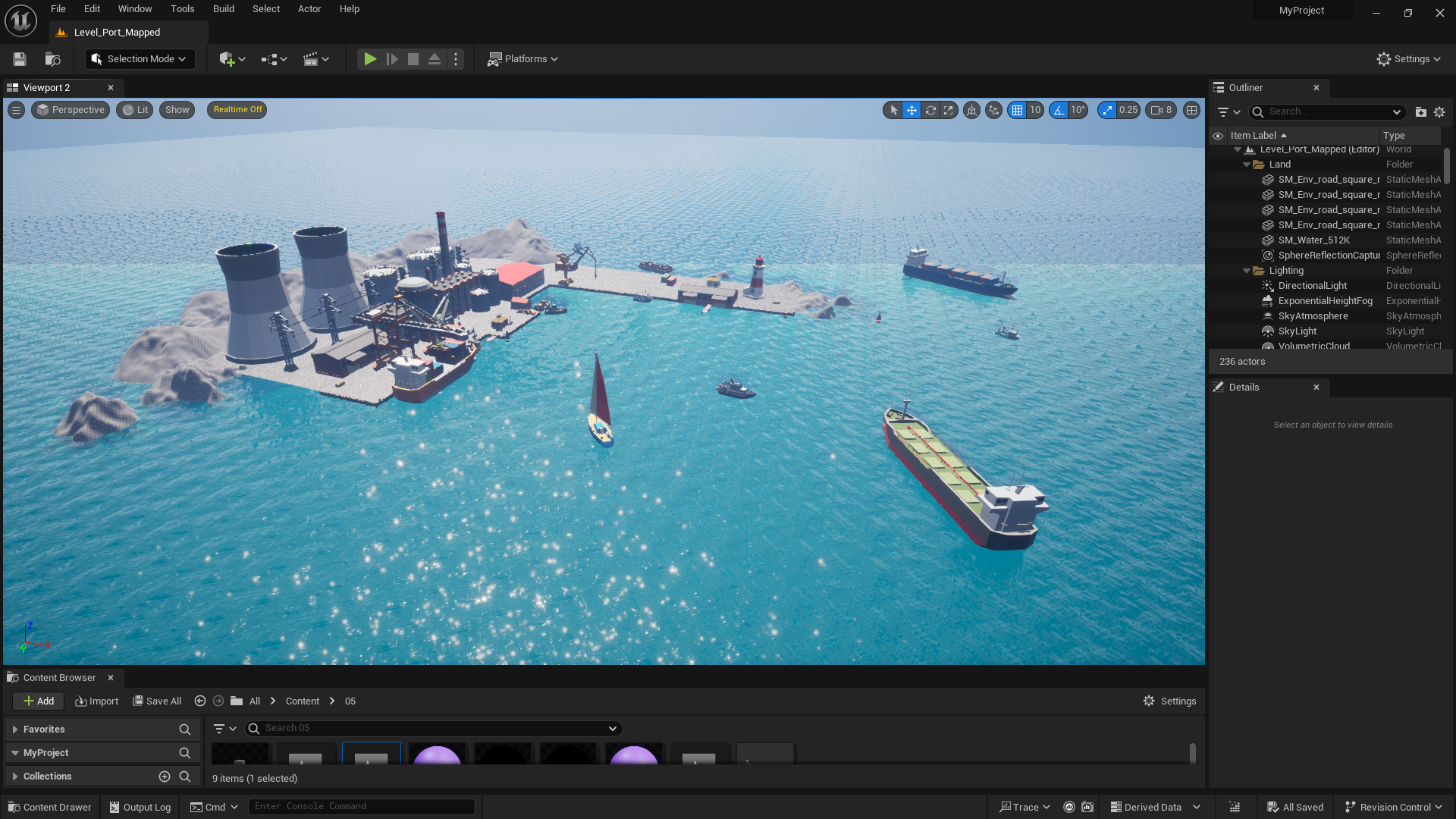
Architected a physically accurate maritime simulation environment in Unreal Engine 5, integrating hydrodynamic wave modeling and automated multi-modal annotation for autonomous vessel training.
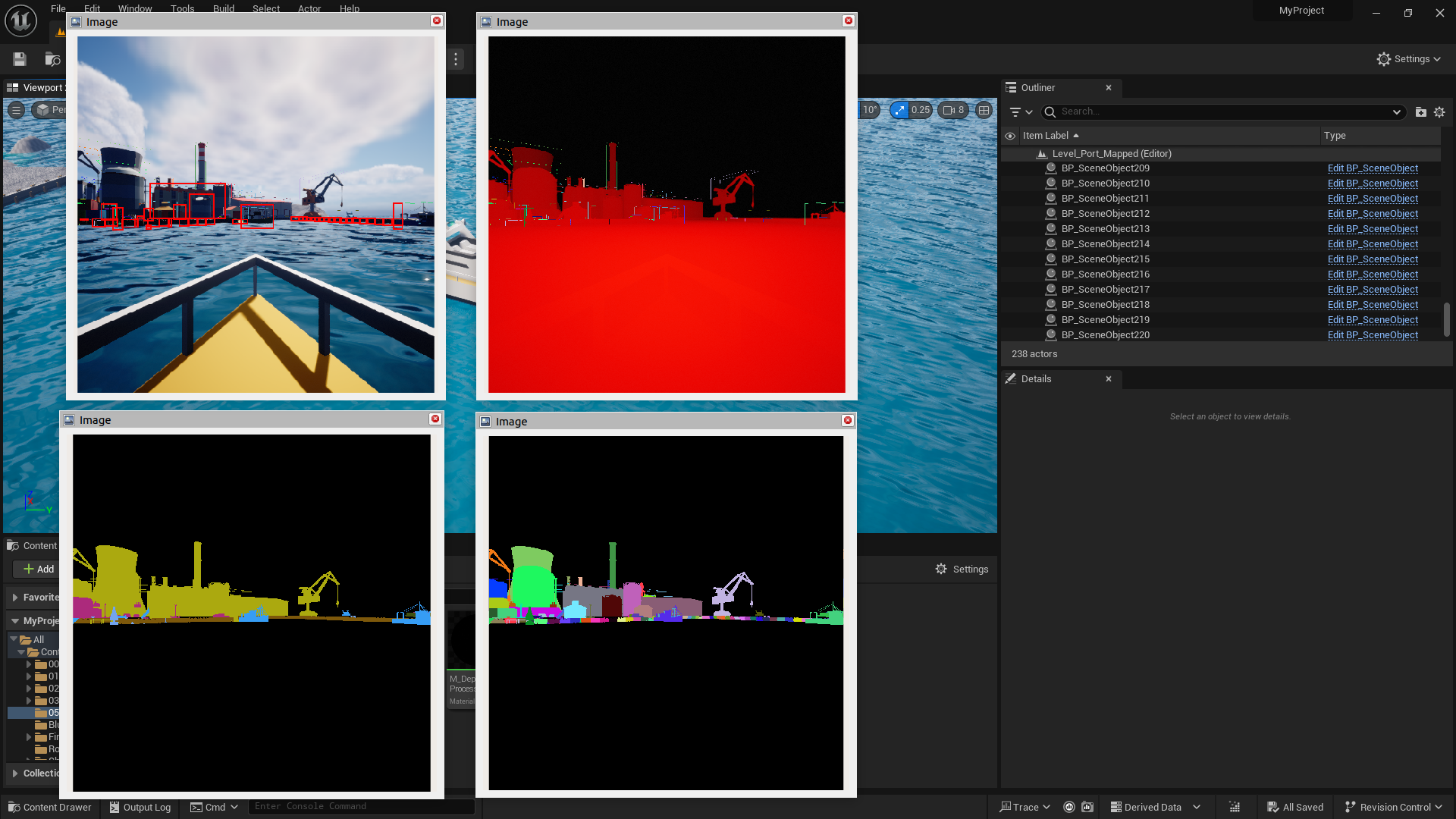
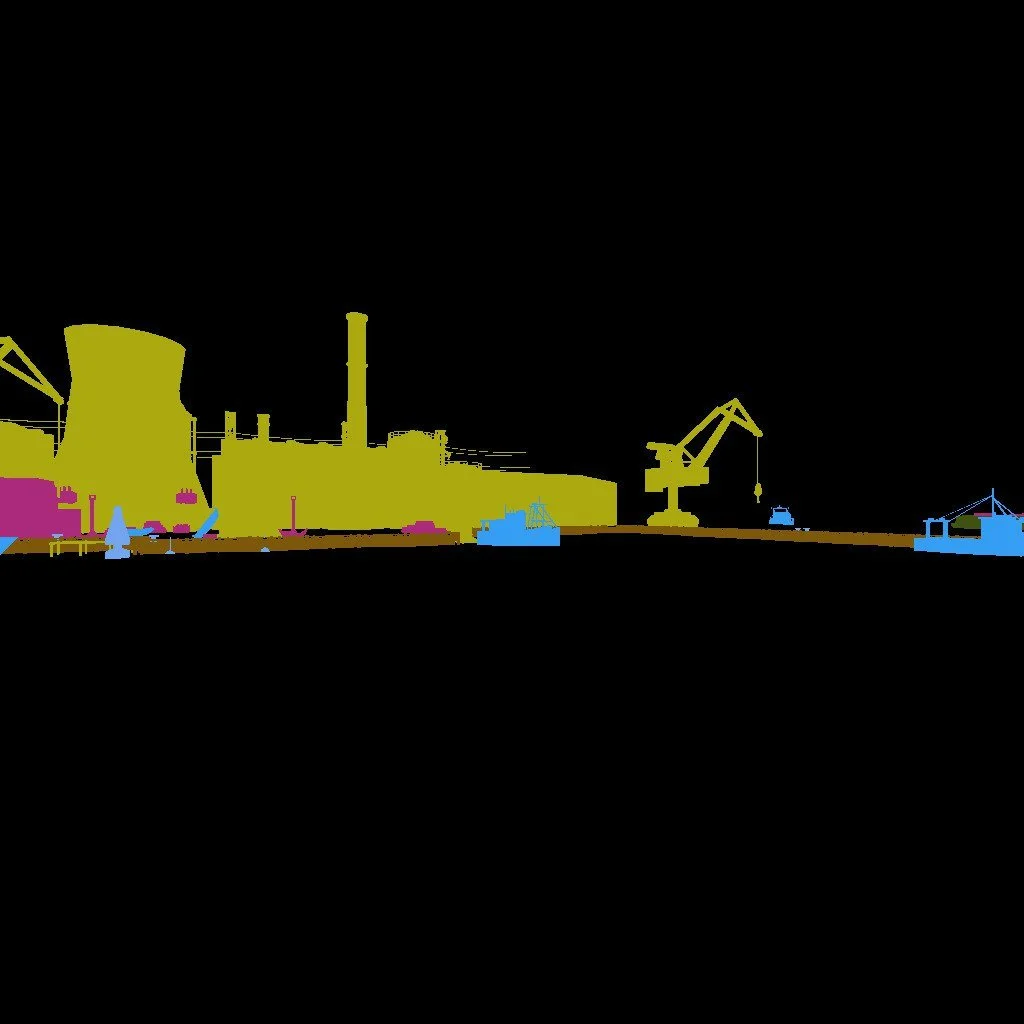
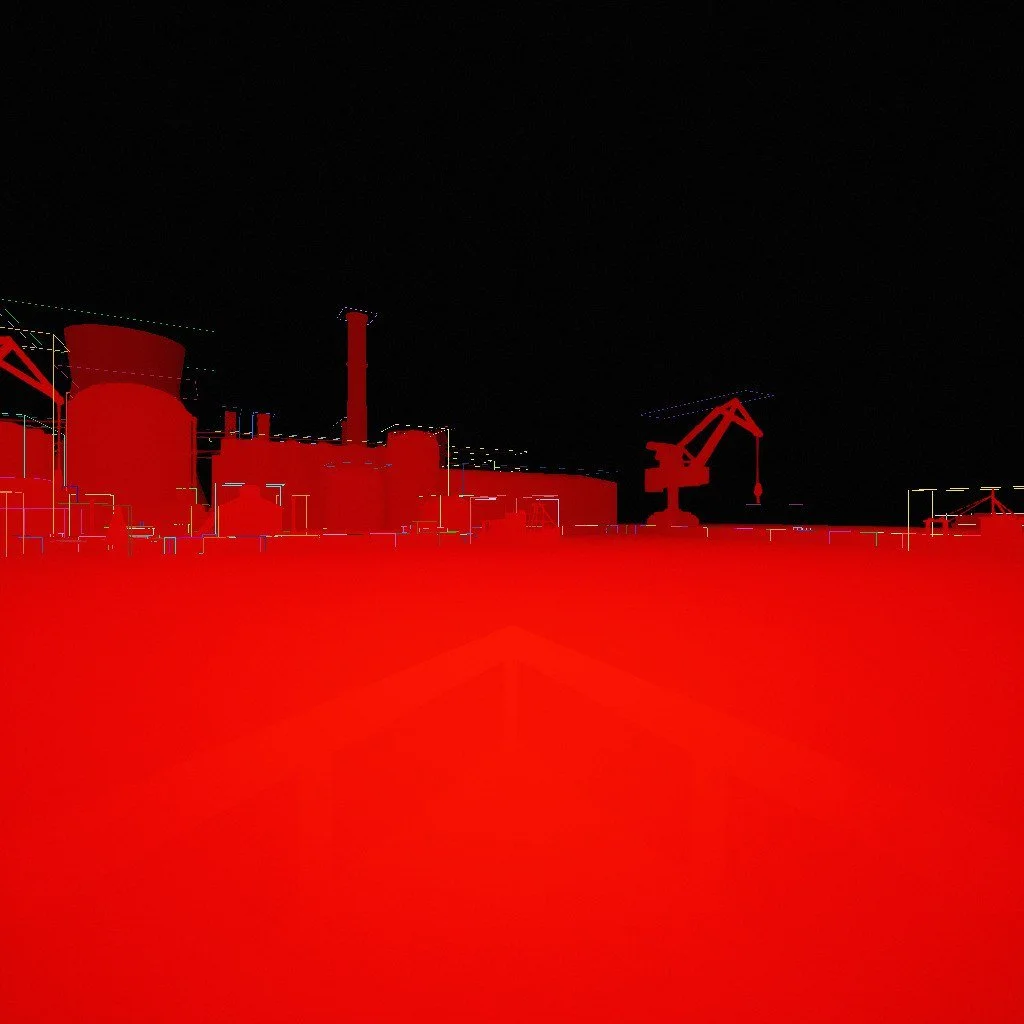
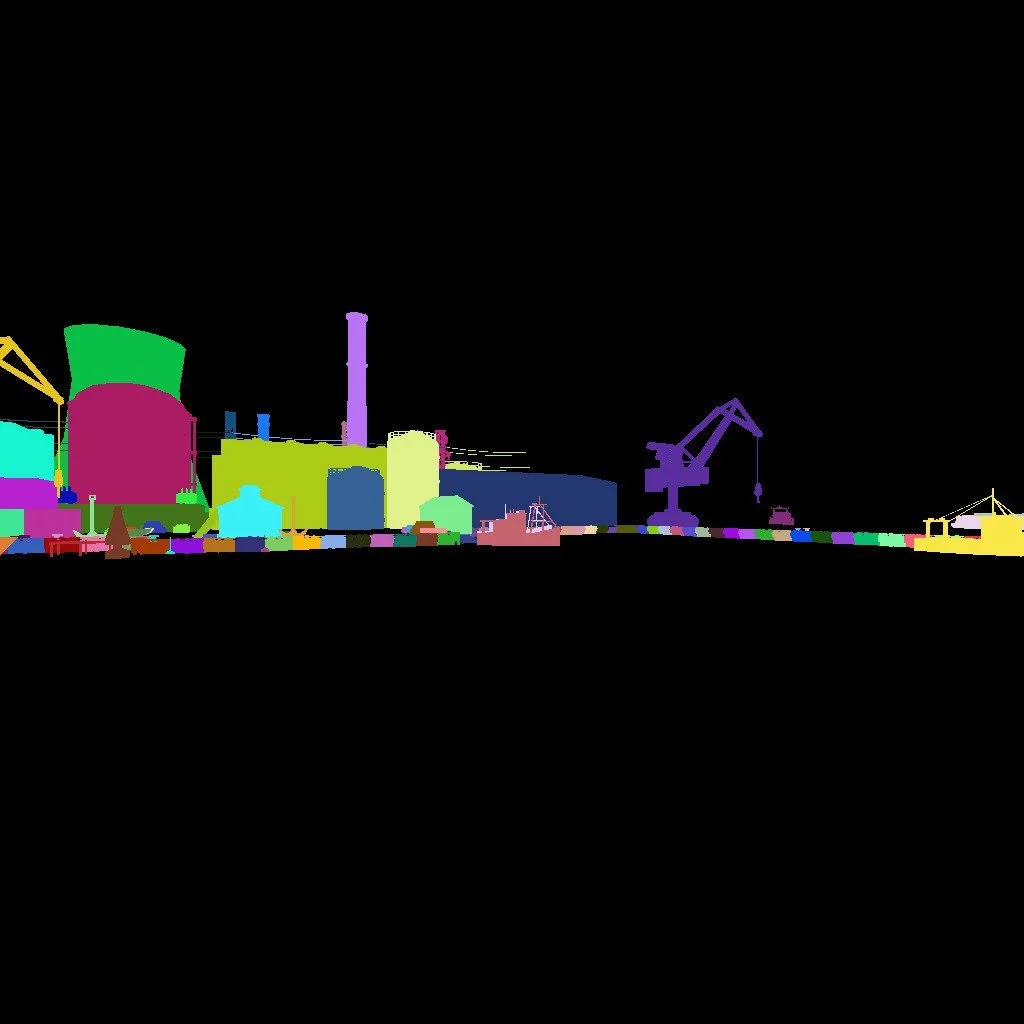
To address the lack of high-quality, labeled datasets for maritime autonomous navigation, I developed a comprehensive simulation framework within Unreal Engine 5. This project bridged the gap between visual realism and physical accuracy, providing a scalable solution for generating pixel-perfect "ground truth" data—including depth maps and instance segmentation—essential for training computer vision models in complex nautical environments.
Technical Challenges & Solutions
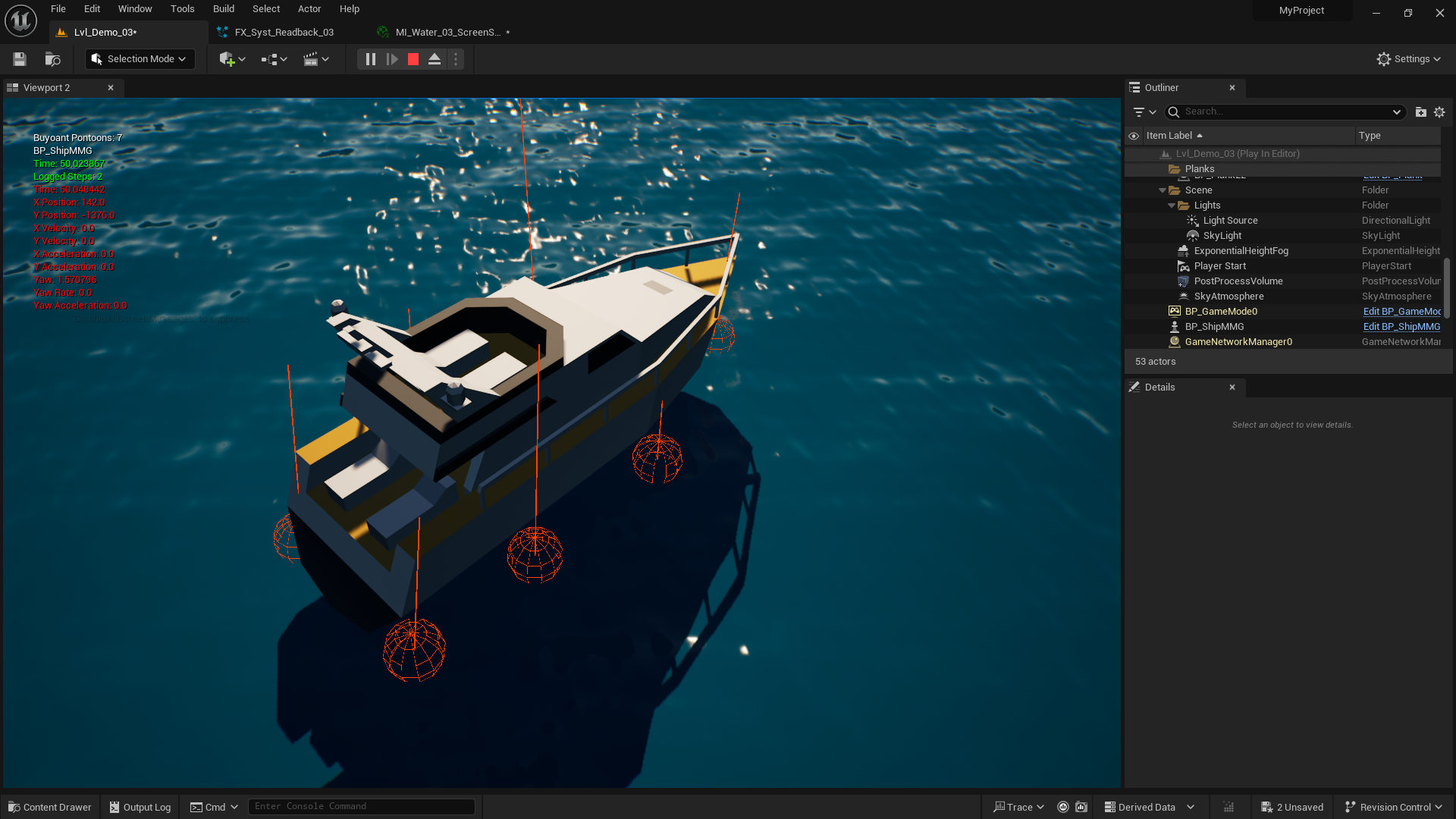
Hydrodynamic Realism: Implementing "natural" water isn't just a visual task; it requires physics. I integrated a Gaussian wave approach and developed C++ scripts to handle buoyancy and vessel kinematics, ensuring that the simulated ship responded realistically to sea states rather than just moving on a flat plane.
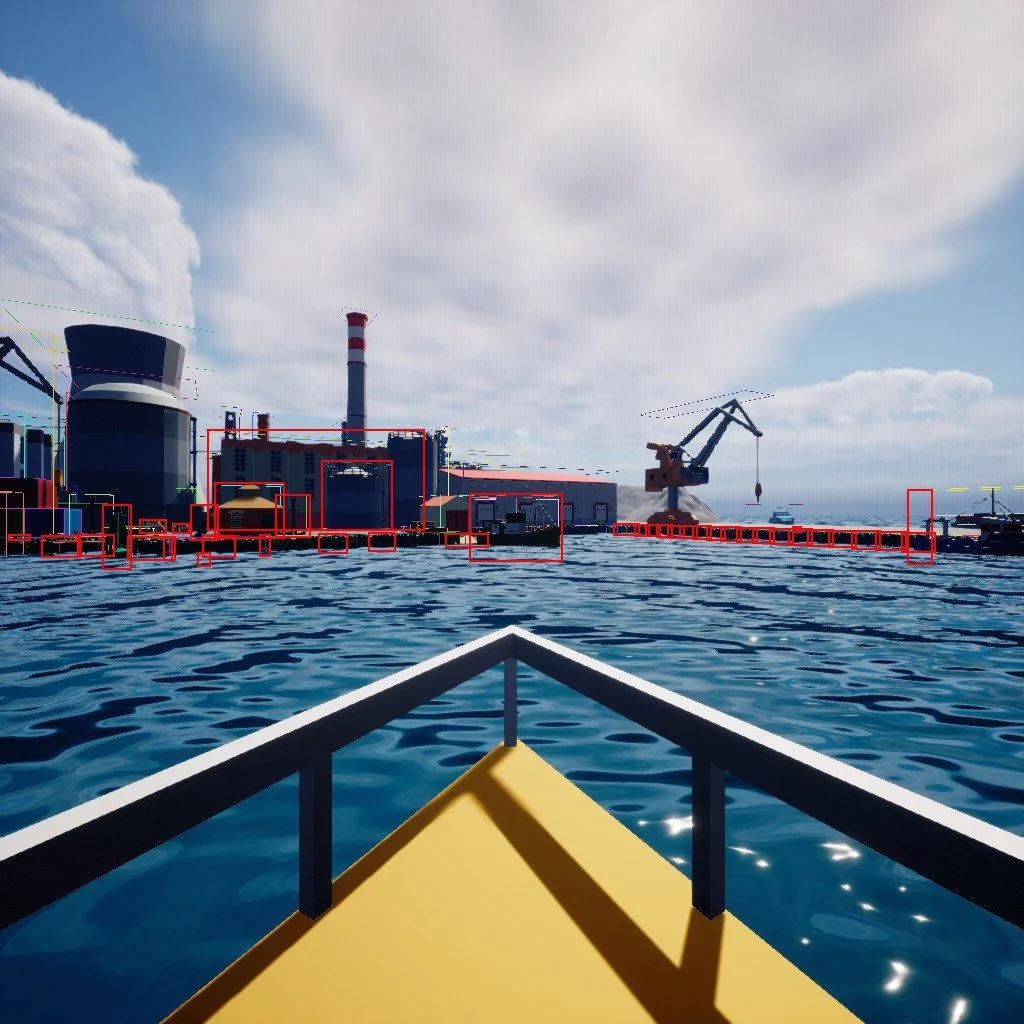
Custom Data Extraction: Standard game engines don't natively export the specific metadata required for AI training. I engineered a custom labeling and masking tool that leveraged object-specific properties to export RGB, depth, and unique ID segmentation masks simultaneously.
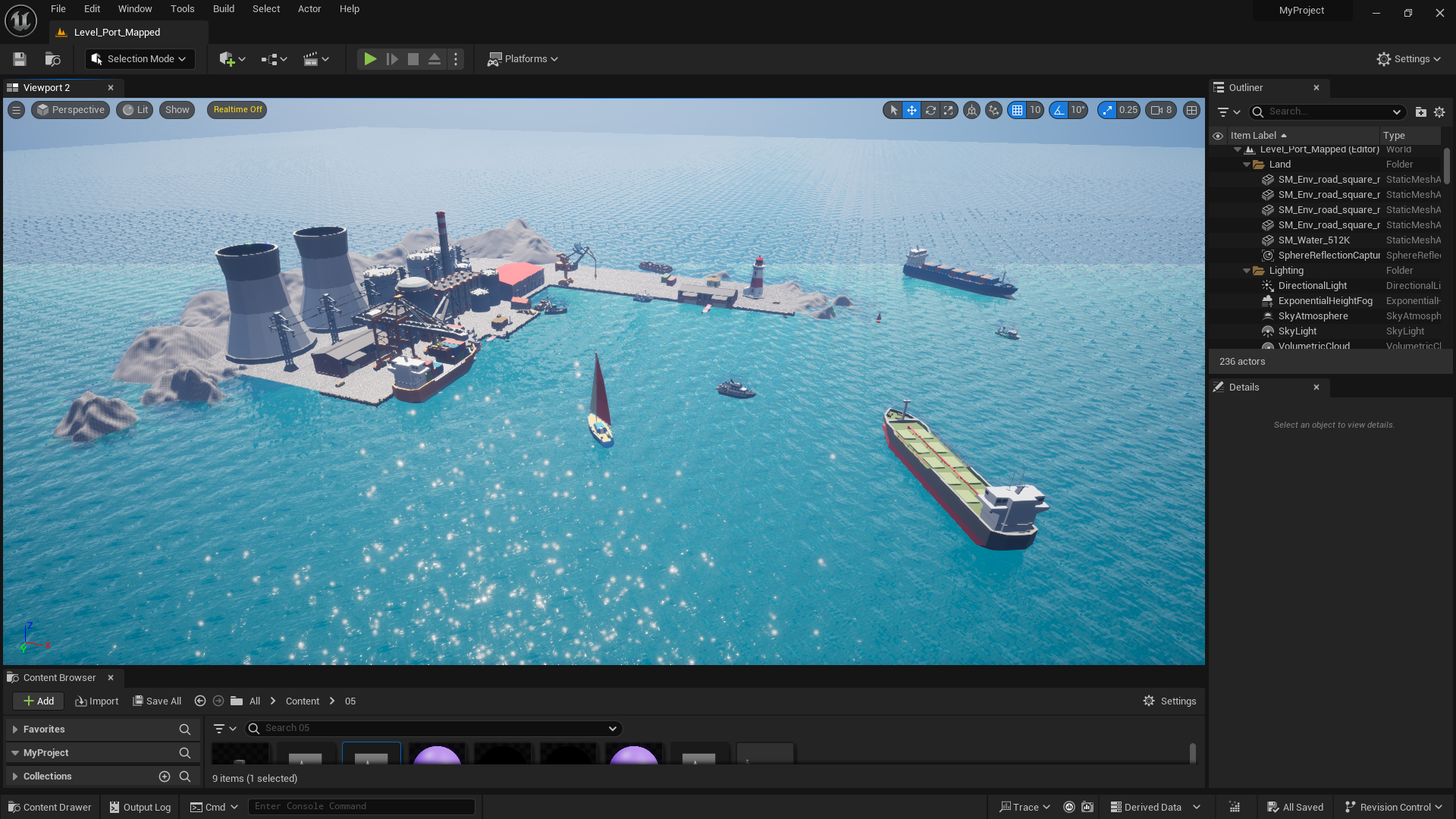
Environmental Complexity: Port infrastructures present high-occlusion environments. I modeled and placed diverse assets using Blender to create high-density scenarios that stress-test detection algorithms under varying light and weather conditions.
Technical Stack
Engine & Core Logic: Unreal Engine 5 (C++ & Blueprints)
Asset Engineering: Blender
Physics Modeling: Gaussian Wave Theory & Hydrodynamic Buoyancy Equations
Data Output: Multi-modal Pipeline (RGB, Depth, Semantic/Instance Segmentation)
Engineering Highlights
Scientific Rigor: Translated complex mathematical equations for wave dynamics and buoyancy into a real-time, high-performance simulation environment.
Automated Labeling: Developed a proprietary toolset within UE5 to automate the generation of annotated metadata (position, orientation, and class IDs), eliminating the need for manual data entry.
Architecture & Performance: Utilized a hybrid C++/Blueprint architecture to ensure maximum performance for physics calculations while maintaining flexibility for scene assembly.